
Andrew, the Overlooked Apostle
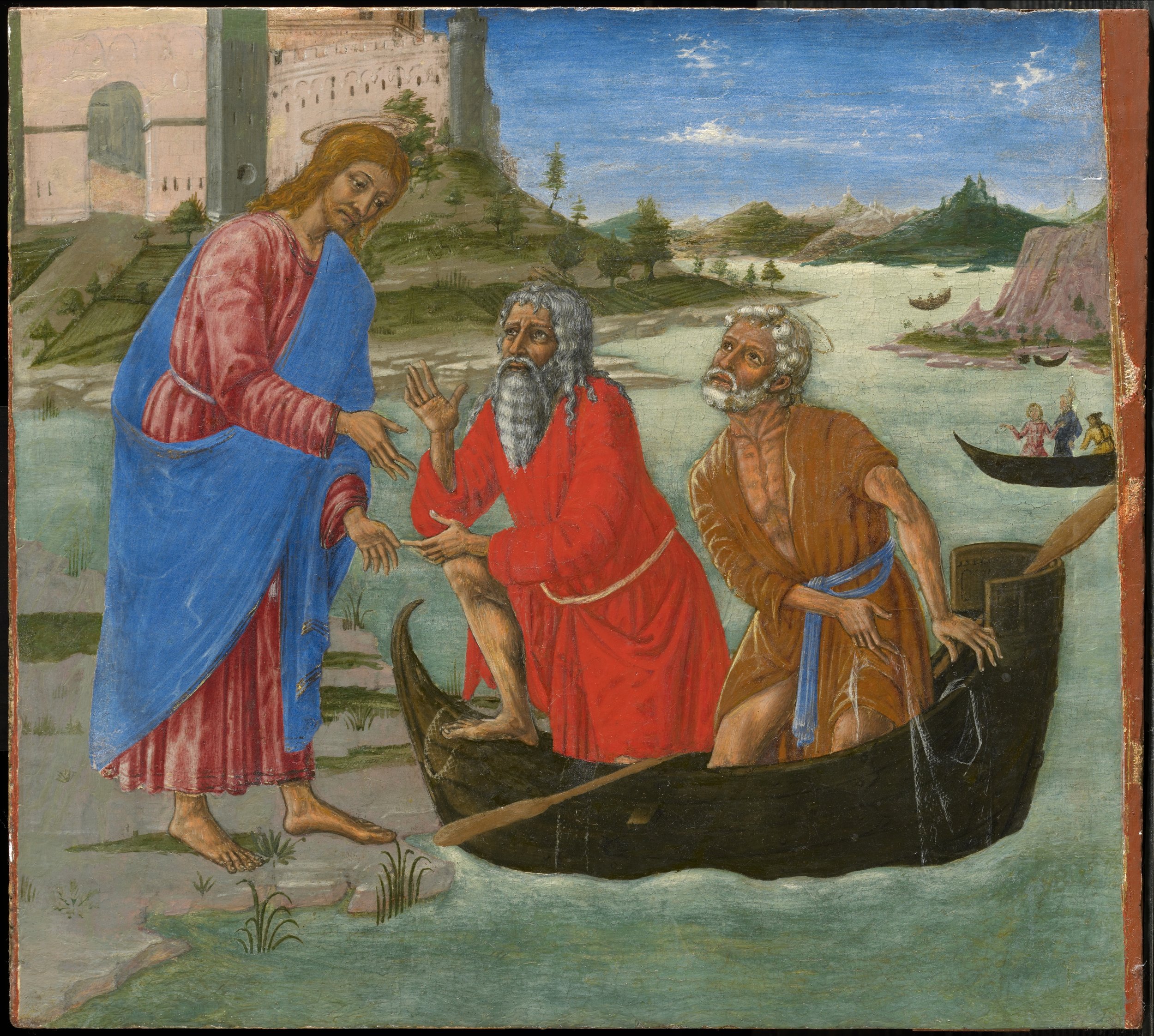
Andrew the Apostle often stands in the shadow of his more prominent brother, Simon Peter. But a closer examination of the Gospel accounts reveals a disciple of remarkable faithfulness and initiative. Let’s consider his contributions recorded in the New Testament.
The First Apostle?
Andrew, a fisherman from Bethsaida, was initially a disciple of John the Baptist. When John pointed out Jesus as the “Lamb of God” (John 1:36), Andrew followed Jesus and spent the day with him. He immediately went to find Simon, telling him, “We have found the Messiah” (John 1:41), and brought him to Jesus, who gave Simon the name Cephas. For this, the Eastern Orthodox Church has given Andrew the title Protokletos (Πρωτόκλητος), “the First-Called.”
The Call by the Sea
Later, as Jesus was walking by the Sea of Galilee, he encountered the two brothers casting nets. He said to them, “Follow me, and I will make you fishers of men” (Matt 4:19). They left everything immediately (Matt 4:18-20; Mark 1:16-18). His Greek name Andreas (Ἀνδρέας) means “manly” or “courageous,” which is fitting for someone who boldly followed Jesus. Jesus uses his profession as a metaphor for following him – Andrew goes from catching fish to catching people. Andrew’s name consistently appears in the lists of the Twelve (Matt 10:2; Mark 3:18; Luke 6:14; Acts 1:13), indicating his steady presence.
Key Instances of Ministry
Among a hungry crowd of 5,000, while Philip grimly calculates the impossibility of feeding them, Andrew spots a boy and his lunch: five barley loaves and two fish. He brings the boy to Jesus, wondering about the inadequacy of his offering: “How far will they go among so many?” (John 6:9). This sets the stage for Jesus’s miracle.
“In a modern world of spotlight-chasing, we can follow Andrew’s example of steady, unassuming ministry that points to Jesus and his power.”
Similarly, when some Greeks came to Philip seeking Jesus, Philip went straight to Andrew. The two brought the seekers to Jesus, enabling a pivotal exchange. There, Jesus declares a turning point in his earthly ministry: “The hour has come for the Son of Man to be glorified” (John 12:20-23).
Andrew's pattern emerges: He consistently connected others to Christ. He doesn’t take center stage, but acts as a sturdy bridge.
Theological Significance
Peter is mentioned over 160 times in Scripture; Andrew only twelve times. Yet Andrew introduced the "Rock," brought outsiders to Jesus, and offered what little he found. Perhaps other apostles are more well-known, but Andrew was faithful and effective. For those who follow Jesus, Andrew is an example of humble service that furthers God's mission. God uses connectors and connections.
Church Tradition on Andrew
After Christ’s ascension, early church tradition indicates that Andrew went on missionary journeys, preaching in Thrace, Scythia, and along the Black Sea. He is said to have established church leadership in Byzantium (later Constantinople). Tradition states that he was executed on an X-shaped cross, which is now called St. Andrew’s cross. According to legend, his relics were taken around the known world, including the coast of Scotland, where the town (with cathedral and university) of St. Andrews bears his name. The Feast of St. Andrew, observed primarily by the Catholic Church and Eastern Orthodox Church, is on November 30, the day of his martyrdom.
Encouragement for Modern Disciples
Andrew models quiet effectiveness among the flashier apostles. First, he was always a bridge – connecting people to Christ: Simon, the boy and his lunch, and the Greeks. Second, he recognized the resources being limited – a boy with five loaves and two fish – but offered it anyway. Jesus multiplied it. Third, he was constant, showing up in every list of the Twelve. No fanfare, just faithfulness. In a modern world of spotlight-chasing, we can follow Andrew’s example of steady, unassuming ministry that points to Jesus and his power.
A Prayer for a Ministry Like Andrew’s
“Lord, we remember Andrew, the first-called follower who connected others to you: Peter, the boy with his loaves and fish, the seeking Greeks. Give us a desire to bring others to you, too. We remember his quiet service, faithfully stewarding the little he had. In the end, he died for his service to you. Lord, please shape our ministries, like Andrew’s, to exalt Christ and serve your church. Amen.”